
Share this product :
Sodium bromide
- Origin
- : China
- CAS Number
- : 7647-15-6
- HS Code
- : 28275110
Basic Info
- IUPAC Name
- : sodium bromide
- Molecular Formula
- : NaBr
- Molecular Weight (g/mol)
- : 102.8900
- Synonyms & Trade Names
- : Sodium bromide; Sedoneural; Bromonatrium
- Purity / Assay (%)
- : 99% min
- Grade / Quality Level
- : Technical Grade
- Physical Form
- : Solid
- Concentration
- : Pure substance
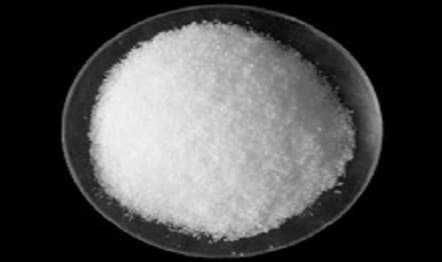
- Appearance / Color
- : White to off-white solid
- Odor
- : Odorless
- Melting Point (°C)
- : 747.0000
- Boiling Point (°C)
- : 1390
- Density (g/cm³)
- : 3.2030
- Solubility in Water
- : Freely soluble
- UN Number
- : Not applicable
- H-Statements
- : None
- P-Statements
- : P260
- REACH Status
- : Registered
- Drug Precursor Status
- : Non-precursor
- Storage Class (GHS)
- : 13
- Storage Conditions
- : Cool, dry; tightly sealed
Categories
Share this product :
Brief Overview
At room temperature, sodium bromide is odourless, slightly bitter and highly toxic. It can absorb moisture easily and has high solubility in water but poor solubility in alcohol. Sodium bromide aqueous solution is neutral with electronic conductivity. The anhydrous sodium bromide crystal will be precipitated out at 51°C with dihydrate compound forming at temperature lower than 51 °C.
Manufacturing Process
There are 2 methods of manufacturing sodium bromide:
Method 1: Urea reduction:
Sodium carbonate is added to urea in hot water and fed into the reactor. Bromine is gradually added into the reactor to generate sodium bromide. After which, the mixture is filtered, evaporated and crystallized and sodium bromide particles are separated and dried to obtain dry sodium bromide. The reaction is as follow:
3Br2 + 3Na2CO3 + NH2CONH2 → 6NaBr + 4CO2 + N2 + 2H2O
Method 2: Neutralization method:
Add about 40% hydrobromic acid into the reactor, stir and slowly add 40% caustic solution for neutralization to ph level of 7.5~8 to generate sodium bromide. After which, sodium bromide is obtained by filtering the mixture, evaporation, crystallization and separating the crystals out using a centrifuge. The reaction is as follows:
HBr + NaOH → NaBr + H2O