
Share this product :
Indigo Blue
- Origin
- : China
- CAS Number
- : 482-89-3
- HS Code
- : 32030040
Basic Info
- Physical State
- : Solid
- Appearance / Color
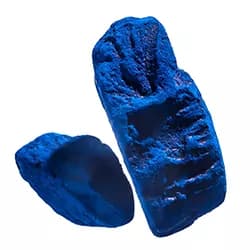
- : Blue to blue-purple powder
- Odor
- : Odorless
- Taste
- : Not applicable (food colorant)
- Moisture Content (%)
- : <5%
- pH
- : 7.0-8.5 (1% solution)
- Synonyms & Trade Names
- : Indigotine; FD&C Blue #2; CI 73015; E132; Indigo carmine
- Total Plate Count (TPC)
- : <1,000 CFU/g
- Yeast & Mould
- : <100 CFU/g
- E. Coli
- : Negative/25g
- Coliform Bacteria
- : <100 CFU/g
- Salmonella
- : Negative/25g
- Shelf Life
- : 36 months
- Packaging Size
- : 25 kg
- Packaging Type
- : Drum / fiber drum
- Storage Conditions
- : Cool, dry, dark place
- Halal Certification
- : Available
- Kosher Certification
- : Available
- ISO / HACCP
- : Yes
- Food Grade / Regulatory Status
- : Food grade
- Color Intensity (Absorbance)
- : 85% min
- Heavy Metals (As, Pb, Hg, Cd)
- : <10 ppm
Categories
Share this product :
Brief Overview
Indigo dye is a natural or synthetic dye that produces a deep blue color. Historically, it has been derived from the leaves of certain plants, particularly the Indigofera genus, which contains a high concentration of the blue pigment. The process of extracting the dye involves fermentation and oxidation of the plant material.
Today, synthetic indigo dyes are more commonly used in the textile industry due to their availability, cost-effectiveness, and consistency in color. However, there's also a growing interest in natural indigo due to its sustainability and eco-friendly aspects, leading to its revival in certain artisanal and sustainable textile practices.
Manufacturing Process
Indigo dye is made from the leaves of Polygonum Tinctorium. The indigo leaves are fermented for 2 to 3 months into a black clump with 2 - 10 % of indigo pigment. Wood ash, lime and bran are then mixed with the indigo clump and subjected to further water mixing, heated to 30~40℃, and then dried to form insoluble blue indigo.
Indigo is subjected to sulfonation with concentrated sulfuric acid, followed by dilution and then neutralization with soda ash. Sodium chloride is then added for salting out, before the mixture is filtered, washed and dried to get the finished product.